
The Lifeline of Learning:
How Donor Funding Powers BRAC Schools

"Every free textbook, every trained teacher, every emergency classroom in a refugee camp — begins with a donor who believed that education is worth investing in."
BRAC School is often celebrated for its innovative One-Teacher Model, its joyful classrooms, and its remarkable success in educating millions. But behind every child who learns to read in a bamboo-walled classroom, behind every girl who avoids child marriage because she is in school, and behind every Rohingya refugee child who holds a crayon for the first time — there is a less visible but equally vital force: donor funding.
Donor agencies are not just cheque-writers for BRAC. They are strategic partners, co-investors in human potential, and enablers of a promise that no poor child should be denied education because of money. This post explores how donor funding works in BRAC Schools, why it is essential, and how the model is evolving from pure donor dependency to a powerful hybrid of external support and BRAC's own self-financing.
1. The Role & Necessity of Donor Funding
BRAC Schools serve the poorest, most marginalized children in Bangladesh — children whose families cannot afford a single notebook, let alone school fees. By definition, these schools cannot generate revenue from tuition. They cannot ask parents to pay for books, uniforms, or bags. Every resource must come from somewhere else.
That "somewhere else" is donor funding.
🎯 Why Donor Funding Is Non-Negotiable
- Zero-fee model: BRAC School is completely free. Without donor grants, there would be no money to pay teachers, print books, or rent classrooms
- Target population: The children served are from ultra-poor families, orphanages, and crisis settings — precisely those who cannot contribute financially
- High per-student investment: While BRAC keeps costs low (~$45 per child per year), serving millions of children requires massive aggregate funding
- Emergency & remote operations: Running schools in Rohingya camps, flood-prone chars, and hilly regions costs significantly more than urban programmes — and donors make this possible
- Innovation & piloting: Donors fund new approaches — digital labs, floating schools, mother-tongue education — that eventually become core programme components
2. Donor Agencies & Partnership Models
BRAC's donor ecosystem is diverse — spanning international development agencies, government bodies, corporate foundations, and private philanthropies. Each partnership follows a structured model that ensures accountability while allowing flexibility.
🤝 Types of Partnership Models
Bilateral & Multilateral Agencies
Organizations like Global Affairs Canada (GAC), FCDO (UK), UNICEF, and the European Union provide large-scale, multi-year grants tied to specific outcomes — such as enrolling 100,000 out-of-school girls or building 500 new schools in crisis zones. These partnerships involve detailed proposals, milestone-based disbursements, and rigorous third-party evaluations.
Corporate Social Responsibility (CSR)
Local and multinational corporations partner with BRAC to fund schools, scholarships, and infrastructure in communities where they operate. These partnerships often focus on digital education, vocational training, and girls' empowerment — aligning business values with social impact.
Private Foundations & Philanthropies
Private foundations play a crucial role by funding targeted, high-impact interventions. They often support specific schools, special projects for children with disabilities, or emergency education responses. Their flexibility allows BRAC to act quickly where government or bilateral funding moves slowly.
🌟 Northwest Children's Foundation (NWCF): A Key Partner
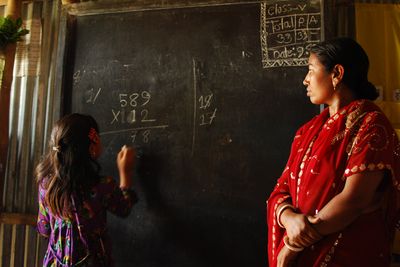
Among BRAC's valued partners is the Northwest Children's Foundation (NWCF), based in the United States. NWCF is dedicated to improving the lives of vulnerable children, and its partnership with BRAC reflects a shared commitment to educational equity.
Through its support, NWCF helps BRAC deliver:
- Free educational materials to children who would otherwise have no access to books or learning tools
- Quality teacher training that improves classroom outcomes in underserved communities
- Safeguarding and child protection measures that ensure vulnerable children learn in safe environments
To learn more about NWCF's mission and work, visit nwcf.org.
3. Transparency & Accountability: Earning Trust
With donor money comes a sacred responsibility: to use every dollar as intended, and to prove that it worked. BRAC has built one of the most robust financial accountability systems in the non-profit sector.
📋 How BRAC Ensures Transparency
- Independent annual audits: All BRAC education programmes are audited by internationally recognized audit firms. Financial statements are publicly available
- Donor reporting: Every donor receives detailed quarterly and annual reports showing exactly how funds were spent, how many children were served, and what learning outcomes were achieved
- Third-party evaluations: Independent researchers and institutions (including the World Bank and BRAC's own Institute of Governance and Development) regularly evaluate programme effectiveness
- Public disclosure: BRAC publishes annual reports, impact assessments, and financial summaries on its website for public scrutiny
- Internal controls: Multi-layer approval processes govern procurement, payroll, and expenditure — ensuring no single person controls the flow of funds
- Community verification: School Management Committees (SMCs) — made up of local parents and elders — monitor school operations and verify that resources reach children
4. Free Education for All: What Donors Make Possible
Perhaps the most visible impact of donor funding is the complete elimination of cost barriers for BRAC School students. For a child from a family living on less than $2 a day, even the price of a notebook can mean the difference between attending school and staying home.
📚 Donor-Funded Learning Materials
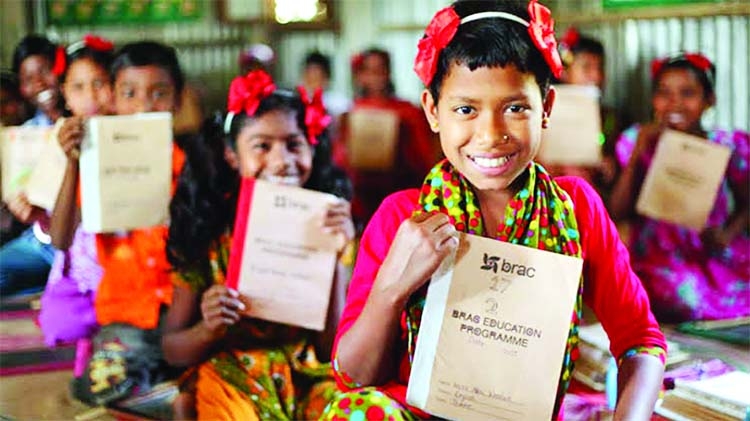
Thanks to donor support, every BRAC School child receives:
Complete Free Learning Kit
- Textbooks: Curriculum-aligned books for all core subjects — Bangla, English, Math, Science, and Social Studies
- Exercise books / Notebooks: Sufficient for the entire academic year, ensuring no child runs out of paper
- Pens, pencils & erasers: Basic writing instruments so children can practice from day one
- Slates & chalk: For pre-primary and early primary students building foundational writing skills
- Reading materials: Supplementary storybooks and graded readers to foster a love of reading
- Art supplies: Crayons, coloured pencils, and craft paper for creative expression
- School bags: Durable bags to protect books from rain and dust during long walks to school
- Uniforms (where applicable): Basic uniforms in special programmes to reduce social stigma and build school identity
These materials are not distributed haphazardly. They are tracked, monitored, and replenished throughout the year. Teachers ensure children use and care for their supplies — teaching responsibility alongside literacy.
5. Quality Improvement & Teacher Training: The Donor Difference
Donor funding does not just pay for books and buildings. It invests in people — specifically, the teachers who make BRAC Schools come alive.
👩🏫 Modern Teacher Training Programmes
Through donor support, BRAC provides comprehensive, ongoing professional development for its teachers:
- Initial training: New teachers receive a 12-day intensive course covering child psychology, experiential learning, classroom management, and subject pedagogy
- Monthly refresher workshops: Regular training sessions keep teachers updated on new methods, curriculum changes, and digital tools
- Digital pedagogy training: Donors fund programmes that teach teachers how to use projectors, tablets, and interactive multimedia content in rural classrooms
- Inclusive education training: Specialised training on teaching children with disabilities, using sign language, and creating accessible learning materials
- Trauma-informed teaching: For teachers in refugee camps and disaster zones, donors fund training on how to support children who have experienced violence, displacement, or loss
🏫 Classroom Environment Improvement
Donor funds also improve the physical and emotional learning environment:
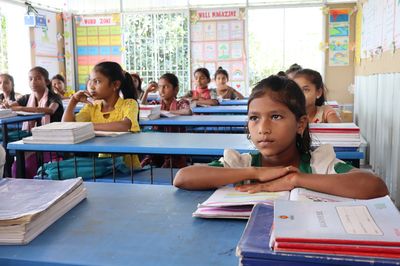
- Colourful, child-friendly classroom decorations and learning aids
- Low-cost furniture, mats, and blackboards
- Handwashing stations and hygiene facilities
- Safe, well-lit spaces that meet child safeguarding standards
6. Special Projects: Reaching the Unreachable
Some of the most important work funded by donors happens far from the spotlight — in places where geography, disaster, or conflict make education nearly impossible.
⛰️ Hilly & Remote Regions
In the Chittagong Hill Tracts and other hilly areas, BRAC runs schools for indigenous children in their mother tongue. Donor funding supports:
- Recruitment of teachers from ethnic minority communities
- Development of multilingual teaching materials
- Transportation and accommodation allowances for teachers in hard-to-reach areas
- Community mobilization to overcome cultural barriers to schooling
🏝️ Char & Wetland Areas
In the river chars of northern Bangladesh and the haor wetlands, where villages are submerged for months each year, donors fund:
- Floating schools: Boat-based classrooms that navigate floodwaters to reach children
- Seasonal schools: Temporary classrooms that operate during dry seasons and relocate when land erodes
- Elevated school structures: Schools on stilts that withstand annual flooding
🚨 Rohingya Refugee Camps: Education in Emergencies
Perhaps the most urgent donor-funded work is in the Rohingya refugee camps of Cox's Bazar and Bhasan Char. Since 2017, donors have enabled BRAC to:
- Operate over 2,500 learning centres for Rohingya children
- Establish Child-Friendly Spaces where traumatized children can learn through play
- Train Rohingya community teachers who speak the children's language and understand their culture
- Provide psychosocial support alongside academic instruction
- Build two-storey bamboo learning centres that maximize limited camp space
Without donor funding, none of this would exist. Emergency education is expensive, logistically complex, and politically sensitive — but donors make it possible because they recognize that even in the darkest crises, children must not lose their right to learn.
7. The Evolution: From Donor-Only to Hybrid Financing
BRAC School has undergone a profound transformation in its financing model. Understanding this evolution is key to understanding its future.
❌ The Old Model: Donor-Dependent Projects
For many years, BRAC School operated primarily as a project-based programme funded by external donors. While this model achieved incredible scale and impact, it had inherent limitations:
- Time-bound cycles: Schools opened and closed according to donor grant periods. A 3-year grant meant 3 years of operation — with uncertainty about what came next
- Donor priority shifts: When donor strategies changed, funding could dry up — even when children still needed the school
- Limited autonomy: Programme design was often shaped by donor requirements rather than purely by community needs
- Community anxiety: Parents and children could never be certain the school would still be there next year
✅ The New Model: Donor + BRAC Self-Financing
Today, BRAC School operates on a hybrid financing model that combines donor funding with BRAC's own institutional resources. This shift represents a maturation of the programme — from a temporary project to a permanent institution.
How the Hybrid Model Works
- Donor funding continues: Partners like NWCF, bilateral agencies, and CSR programmes still provide crucial grants — especially for special projects, emergency responses, and innovation pilots
- BRAC's own revenue steps in: Profits from BRAC's social enterprises (Aarong, BRAC Bank, BRAC Dairy, etc.) are now cross-subsidized into the education programme — covering core operational costs even when donor grants fluctuate
- Shared responsibility: Donors fund specific, high-impact interventions (teacher training, digital labs, emergency education), while BRAC's own funds ensure the day-to-day continuity of schools
- Long-term sustainability: Because BRAC now contributes its own resources, the programme is no longer hostage to donor cycle timelines. Schools can operate continuously, plan multi-year strategies, and build deeper community trust
8. Conclusion: A Partnership That Changes Lives
Donor funding is not charity. It is investment in human potential. When Northwest Children's Foundation, Global Affairs Canada, UNICEF, or any other partner sends funds to BRAC, they are not just paying for books and buildings. They are paying for the moment a child reads their first word. They are paying for the girl who says no to child marriage because she is in school. They are paying for the Rohingya refugee who, despite losing everything, still has a classroom to call their own.
And now, with BRAC's evolution toward a hybrid financing model, that investment is safer than ever. Donor funds are no longer the only pillar holding up the roof — they are one of several pillars, working alongside BRAC's own social enterprise revenue, CSR partnerships, and community contributions. The result is a stronger, more resilient, and more sustainable BRAC School.